
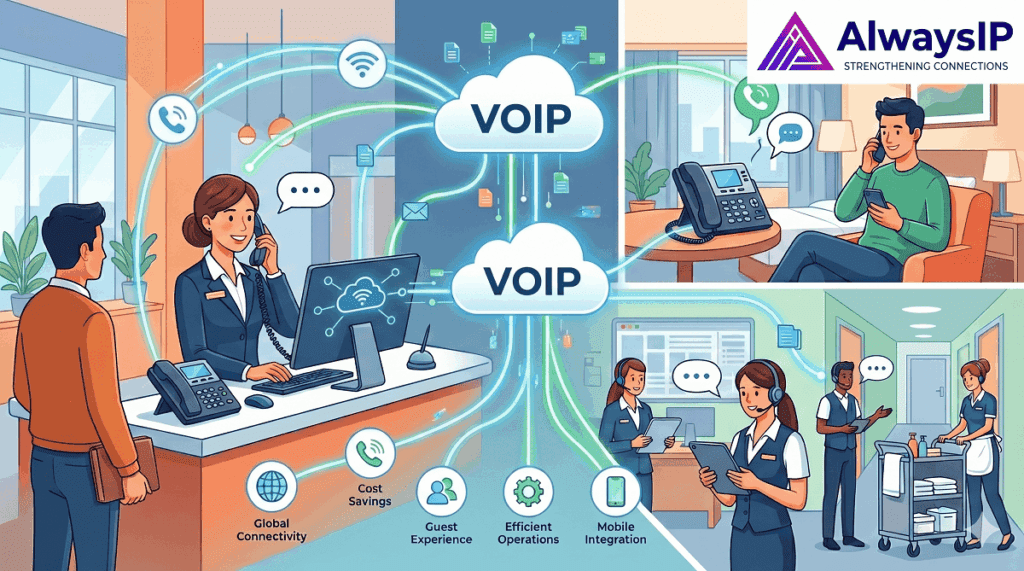
The Hospitality Industry has evolved rapidly over the last decade. Hotels, resorts, restaurants, and tourism businesses are under constant pressure to deliver faster service, personalised guest experiences, and seamless communication. In an industry where customer satisfaction directly impacts reviews, bookings, and brand reputation, communication technology plays a critical role.
Traditional phone systems are no longer enough for modern hospitality businesses. Guests expect instant assistance, staff require better internal coordination, and management teams need flexible communication systems that work across multiple locations.
This is where VoIP solutions are changing the game.
Voice over Internet Protocol (VoIP) technology enables businesses to make and receive calls using the internet instead of traditional landlines. For the Hospitality Industry, VoIP offers cost savings, flexibility, scalability, and advanced features that improve both guest experiences and internal operations.
In this article, we will explore how VoIP solutions are transforming the Hospitality Industry and why more hospitality businesses are investing in cloud-based communication systems.
What Is VoIP Technology?
VoIP stands for Voice over Internet Protocol. Instead of relying on traditional telephone networks, VoIP systems use internet connectivity to transmit voice calls.
Modern VoIP systems provide far more than basic calling features. They often include:
- Call forwarding
- Video conferencing
- Voicemail-to-email
- Mobile integration
- Auto attendants
- Call analytics
- CRM integration
- Multi-location connectivity
For hospitality businesses, these features create a more connected and responsive communication environment.
Why Communication Matters in the Hospitality Industry
Communication is the backbone of the Hospitality Industry. Guests interact with hospitality businesses at multiple touchpoints, including:
- Reservations
- Front desk inquiries
- Room service requests
- Event coordination
- Customer support
- Restaurant bookings
- Concierge services
Poor communication can lead to:
- Negative guest experiences
- Delayed service
- Missed bookings
- Staff confusion
- Low customer retention
VoIP solutions help hospitality businesses maintain smooth communication across departments while improving operational efficiency.
Key Benefits of VoIP Solutions in the Hospitality Industry
Improved Guest Experience
Guest satisfaction is one of the biggest priorities in the Hospitality Industry. VoIP systems allow businesses to respond to guest requests quickly and professionally.
For example:
- Guests can connect directly with reception, housekeeping, or concierge services.
- Calls can automatically route to the correct department.
- Staff can answer calls from mobile devices even when away from desks.
This creates a faster and more personalised customer experience.
Hotels can also use VoIP systems to support international travellers by offering cost-effective international calling options.
Cost Savings for Hospitality Businesses
Traditional phone systems often involve expensive installation, maintenance, and long-distance calling charges.
VoIP systems reduce these costs significantly by using internet connectivity.
Hospitality businesses can save money through:
- Lower call rates
- Reduced infrastructure costs
- Minimal hardware requirements
- Easier maintenance
- Lower international communication expenses
For hotel chains and multi-location hospitality groups, these savings can become substantial over time.
Better Staff Communication
The Hospitality Industry relies heavily on teamwork. Departments such as housekeeping, reception, maintenance, kitchen staff, and management need constant communication.
VoIP systems improve internal communication by enabling:
- Instant call transfers
- Mobile communication
- Department extensions
- Group conferencing
- Real-time updates
This ensures employees can resolve guest requests quickly and efficiently.
Scalability for Growing Businesses
Hospitality businesses often experience seasonal fluctuations and expansion opportunities.
Traditional phone systems can be difficult and expensive to scale. VoIP systems make it easy to add or remove users as needed.
Whether a business is:
- Opening a new hotel
- Expanding restaurant operations
- Managing seasonal staff
- Launching new branches
VoIP provides the flexibility needed for growth.
Multi-Location Connectivity
Many businesses in the Hospitality Industry operate across multiple locations.
VoIP systems connect all locations under one unified communication platform. Staff can communicate between branches easily, while management can monitor operations from a central system.
This is especially useful for:
- Hotel chains
- Restaurant franchises
- Travel agencies
- Resort groups
Unified communication improves efficiency and consistency across all locations.
Enhanced Mobility and Remote Access
Modern hospitality operations are no longer limited to desk phones.
VoIP systems allow employees to make and receive business calls using:
- Smartphones
- Tablets
- Laptops
- Desktop applications
Managers can stay connected even while travelling or working remotely.
This flexibility became especially important after the rise of remote and hybrid working environments.
Advanced Call Management Features
VoIP systems provide advanced communication features that benefit the Hospitality Industry.
Some popular features include:
Auto Attendants
Automatically direct callers to the right department without needing a receptionist for every inquiry.
Call Recording
Useful for staff training, quality assurance, and dispute resolution.
Voicemail-to-Email
Staff can receive voicemail messages directly in their email inbox.
Call Analytics
Managers can monitor call performance, response times, and customer interactions.
Interactive Voice Response (IVR)
Improves customer service by guiding callers efficiently.
These features help hospitality businesses operate more professionally and efficiently.
VoIP and Hotel Management Systems Integration
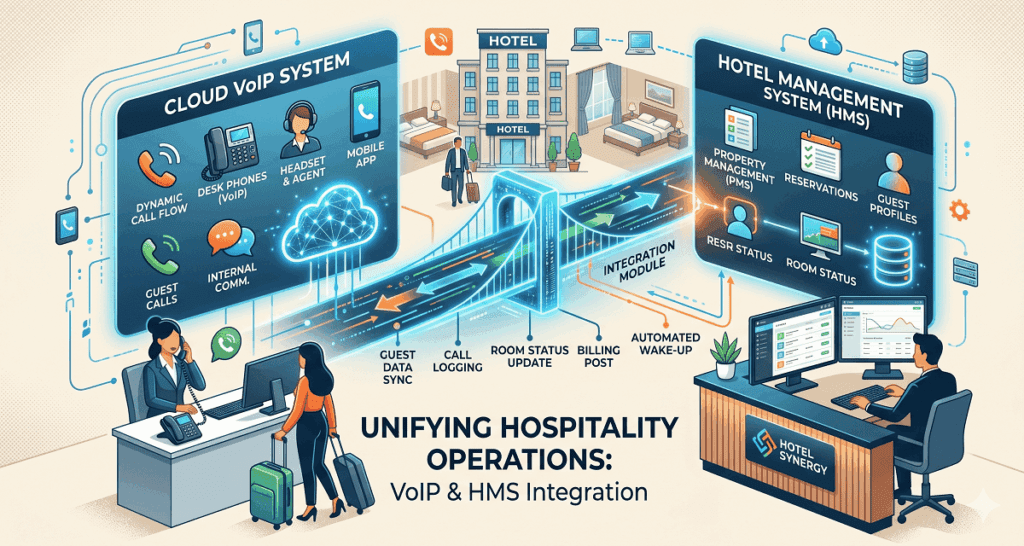
One of the biggest advantages of VoIP technology is integration.
VoIP systems can integrate with hotel management software and customer relationship management (CRM) systems.
This enables hospitality businesses to:
- Access guest information instantly
- Personalise guest interactions
- Improve reservation management
- Track customer preferences
- Enhance service quality
For example, when a guest calls reception, staff can immediately view booking details and provide faster support.
Supporting International Guests
The Hospitality Industry serves travellers from around the world.
VoIP systems make international communication more affordable and reliable.
Hotels and travel businesses can:
- Offer international calling
- Provide multilingual support
- Improve overseas customer communication
- Reduce roaming and long-distance costs
This creates a more welcoming experience for international visitors.
Business Continuity and Reliability
Unexpected disruptions can severely impact hospitality operations.
Modern VoIP systems often include cloud-based backup and disaster recovery features.
If a business faces:
- Power outages
- Hardware failures
- Internet interruptions
- Natural disasters
Calls can automatically redirect to mobile devices or backup systems.
This ensures uninterrupted communication and better customer service.
VoIP Security in the Hospitality Industry
Security is essential in the Hospitality Industry, especially when handling guest information.
Modern VoIP providers offer security features such as:
- Call encryption
- Secure cloud storage
- User authentication
- Firewall protection
- Fraud monitoring
Hospitality businesses should choose trusted VoIP providers with strong security standards to protect customer data and communication systems.
How Restaurants Benefit from VoIP Solutions
VoIP is not limited to hotels. Restaurants also benefit from modern communication systems.
Restaurants can use VoIP to:
- Manage reservations
- Handle delivery orders
- Coordinate staff communication
- Improve customer service
- Support multiple branches
Features like automated call routing and mobile integration help restaurants respond to customers more efficiently during busy periods.
Choosing the Right VoIP Solution for Hospitality Businesses
Not all VoIP systems are the same. Hospitality businesses should consider several factors before selecting a provider.
Reliability
Choose a provider with strong uptime guarantees and dependable support.
Scalability
The system should support future growth and expansion.
Integration Options
Ensure compatibility with existing hotel or restaurant management software.
Customer Support
24/7 technical support is important for hospitality businesses that operate around the clock.
Security Features
Select providers with advanced security and compliance standards.
Mobile Compatibility
Staff should be able to use the system across multiple devices.
The Future of VoIP in the Hospitality Industry
The future of the Hospitality Industry will continue to rely heavily on digital transformation.
VoIP technology is expected to evolve further with:
- AI-powered customer support
- Smart hotel integrations
- Voice automation
- Enhanced analytics
- Unified communication platforms
- Advanced mobile solutions
As guest expectations continue to rise, hospitality businesses will need flexible communication systems that support exceptional customer experiences.
VoIP solutions are becoming a critical part of modern hospitality infrastructure.
Conclusion
The Hospitality Industry depends on fast, reliable, and professional communication. VoIP solutions provide hospitality businesses with the tools needed to improve guest experiences, streamline operations, reduce costs, and support business growth.
From hotels and resorts to restaurants and travel businesses, VoIP technology delivers flexibility and scalability that traditional phone systems simply cannot match.
As digital transformation continues across the Hospitality Industry, businesses that invest in modern communication solutions will be better positioned to meet customer expectations and stay competitive in an increasingly connected world.
FAQs
What is VoIP in the Hospitality Industry?
VoIP is a communication technology that allows hospitality businesses to make and receive calls over the internet instead of traditional phone lines.
How does VoIP improve guest experience?
VoIP improves guest experience by enabling faster communication, better call routing, personalised service, and quicker response times.
Is VoIP cost-effective for hotels?
Yes, VoIP systems reduce infrastructure costs, maintenance expenses, and international calling charges, making them highly cost-effective for hotels.
Can VoIP systems support multiple hotel locations?
Yes, VoIP systems can connect multiple locations under one communication platform, making management and staff communication easier.
Are VoIP systems secure for hospitality businesses?
Modern VoIP systems include encryption, secure cloud storage, authentication features, and fraud protection to help secure communication data.
Can restaurants use VoIP systems?
Yes, restaurants use VoIP systems for reservations, customer support, staff communication, and order management.
Why is VoIP important for the Hospitality Industry?
VoIP helps the Hospitality Industry improve communication efficiency, customer satisfaction, operational flexibility, and overall business performance.